


.webp)

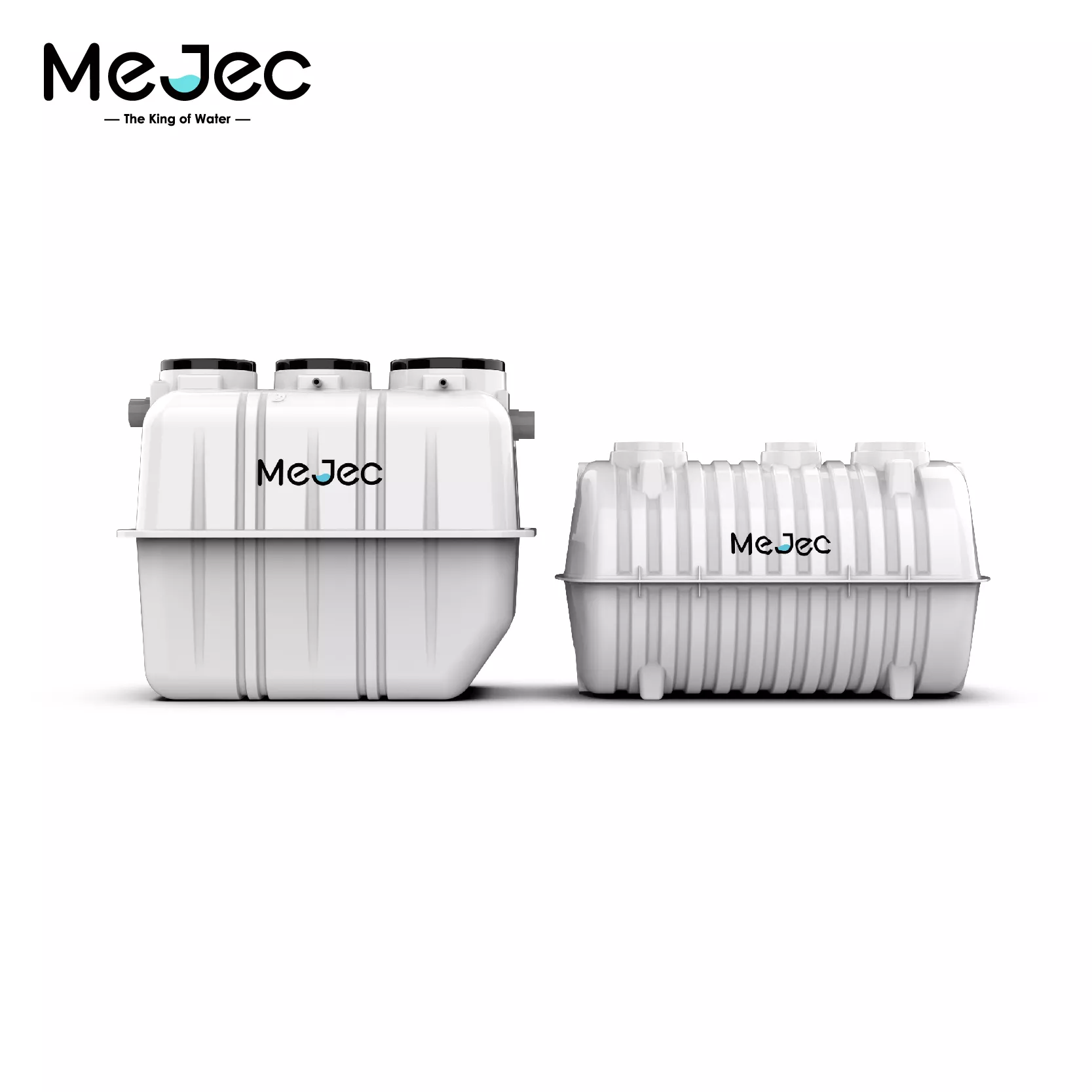
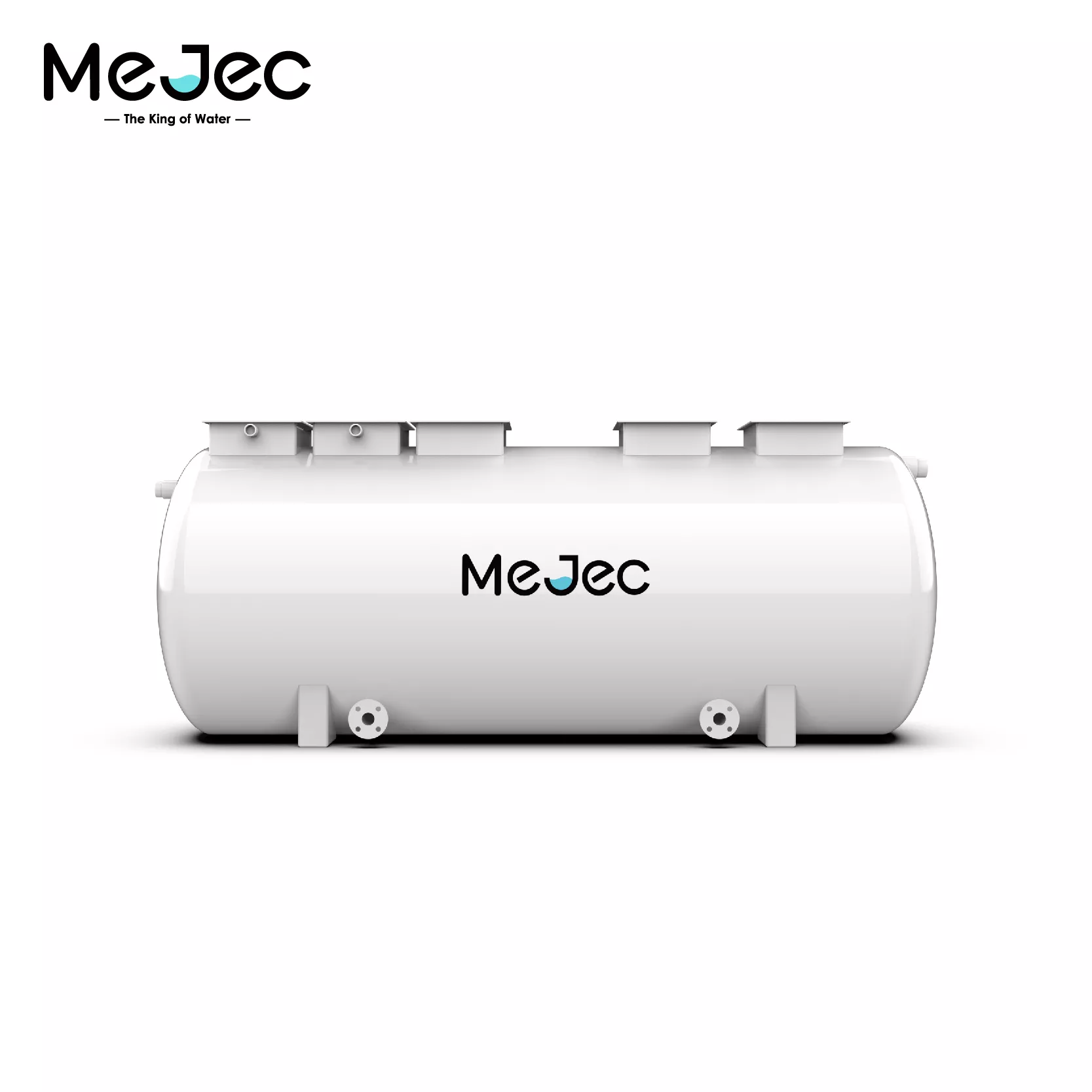
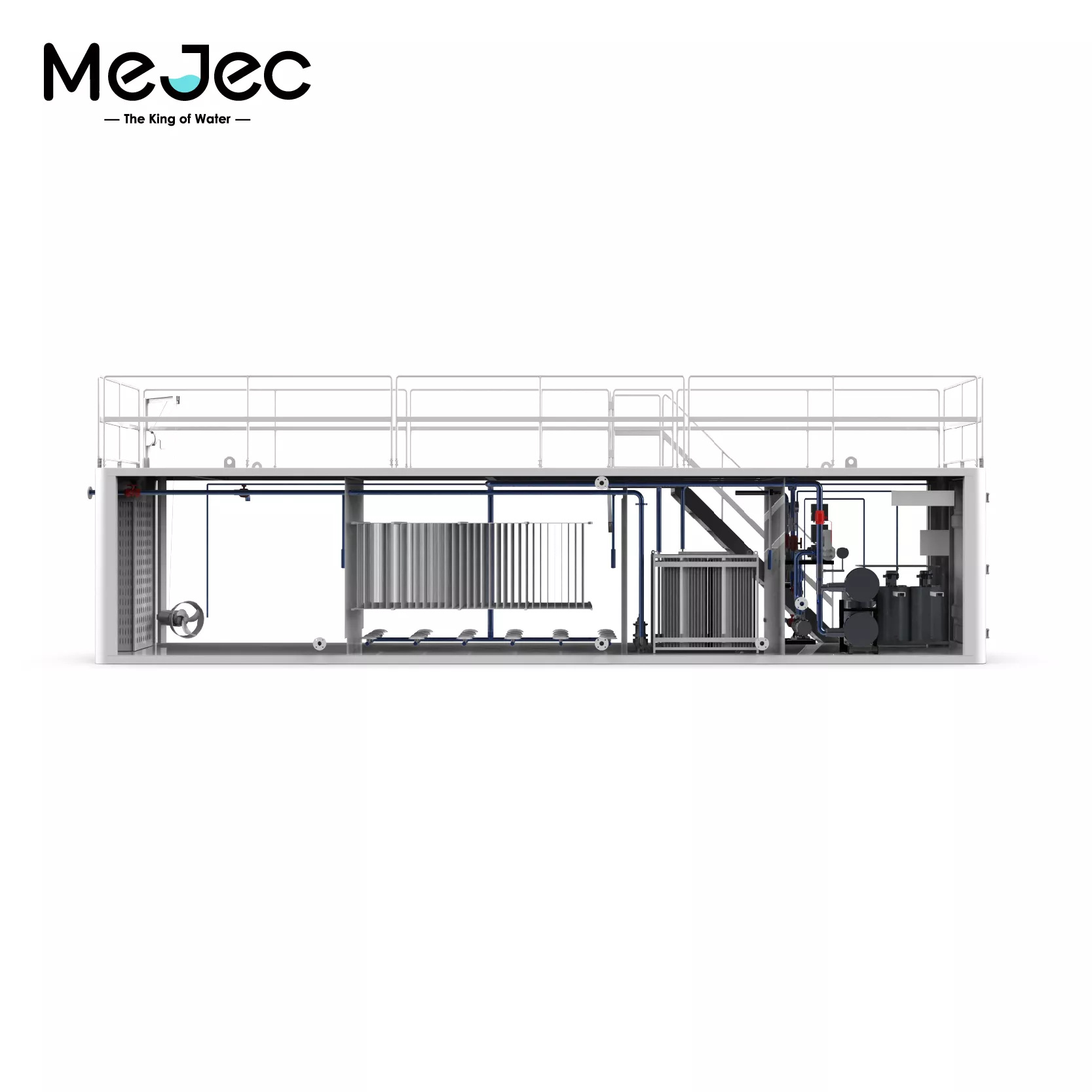
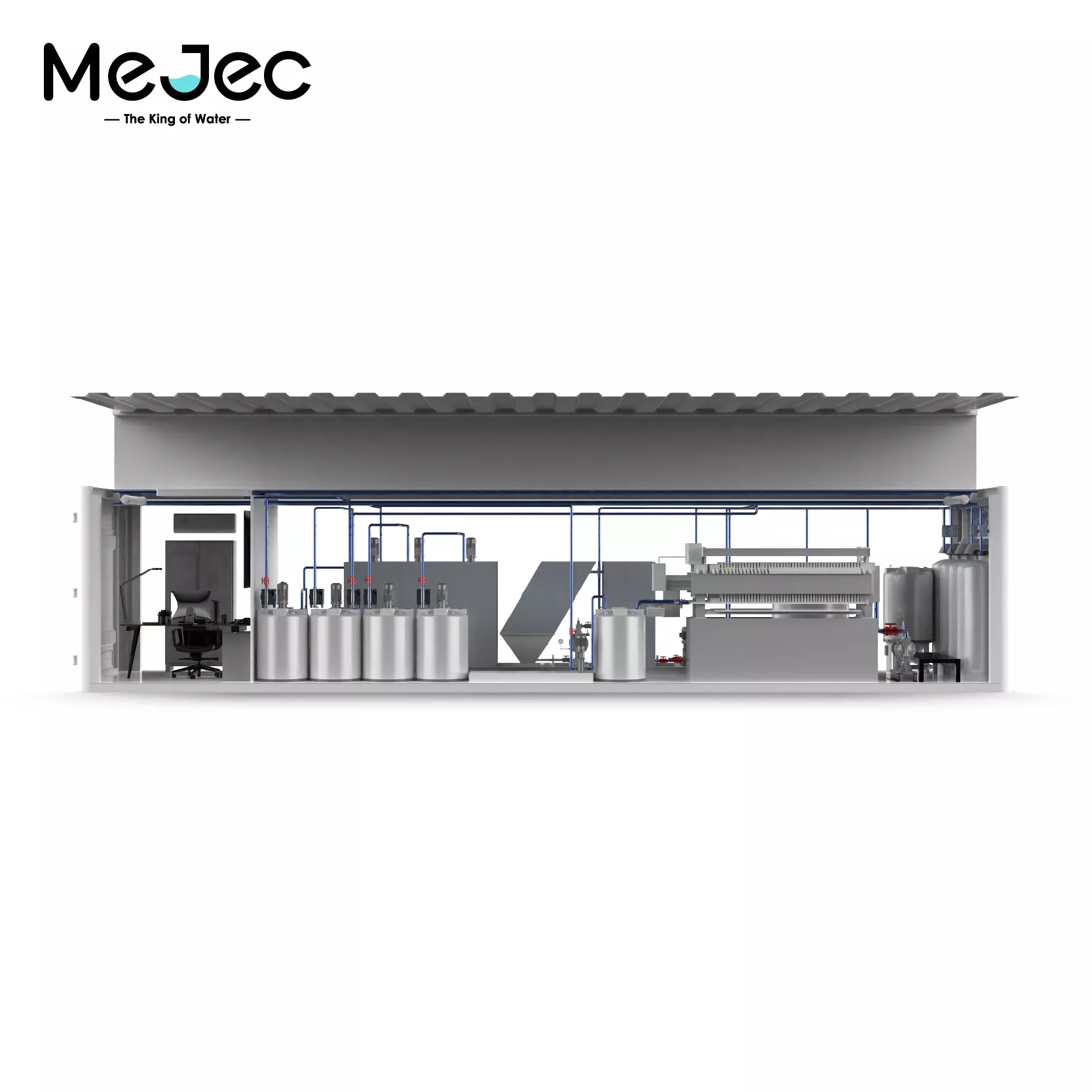
Middle East Domestic Wastewater Treatment Project: 60 m³/day Containerized MBR System
Explore Mejec’s 60 m³/day containerized MBR wastew...
More


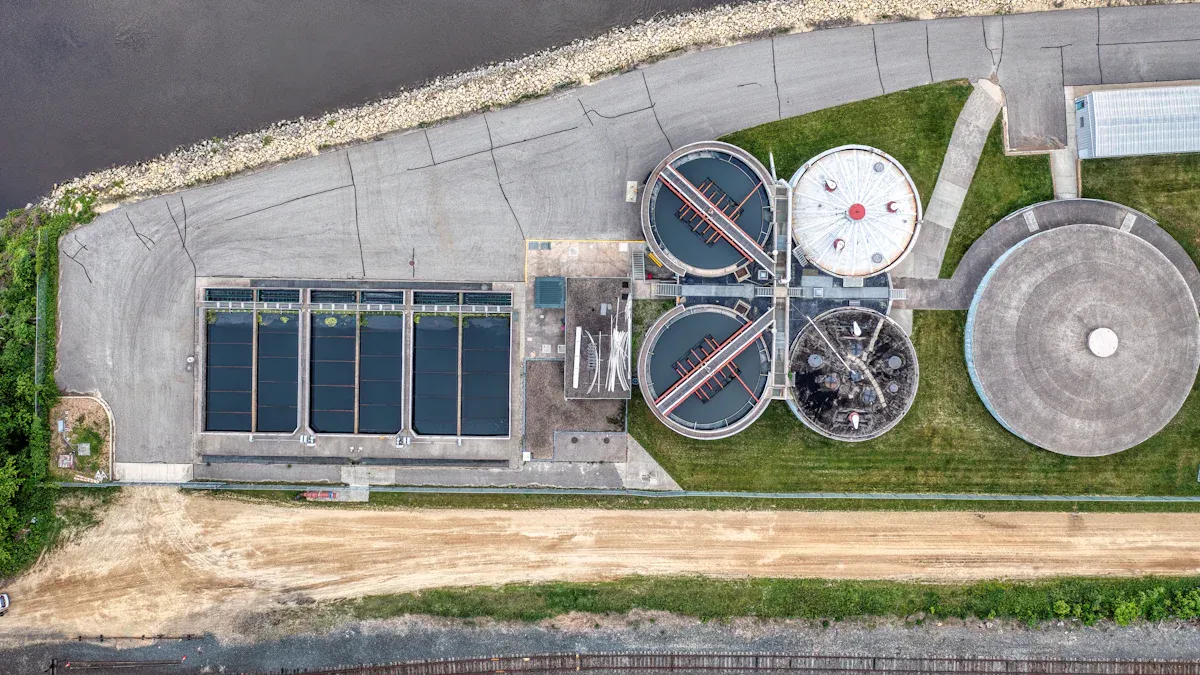
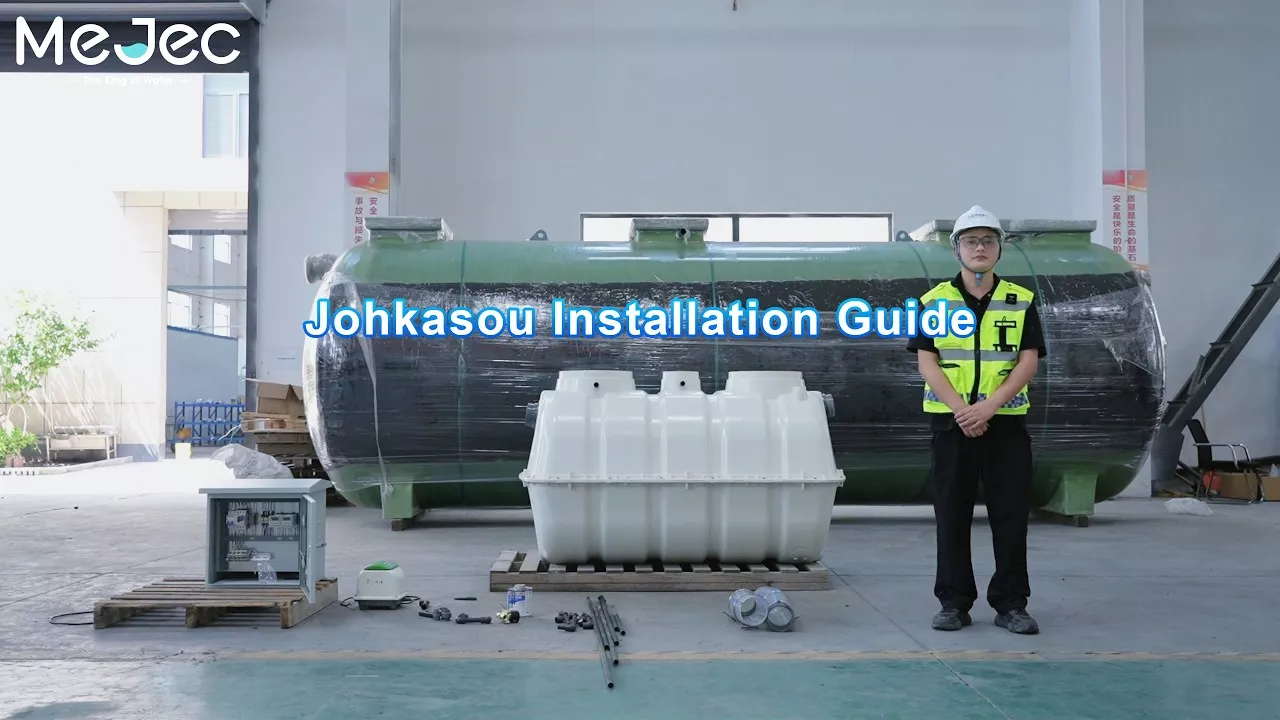
Mejec Johkasou-SB leads the industry as the most efficient industrial sewage treatment plant in 2026. Experts evaluate energy consumption, pollutant removal rates, operational costs, scalability, and environmental impact to determine efficiency. These criteria help facilities achieve sustainable wastewater management.
Mejec Johkasou-SB is the top industrial sewage treatment plant in 2026, known for its high efficiency and low operational costs.
Choosing the right sewage treatment plant requires matching its features to specific industry needs, ensuring compliance and cost-effectiveness.
Future trends in technology, such as AI and modular designs, will enhance efficiency and resource recovery in sewage treatment plants.
Efficiency metrics help determine how well an industrial sewage treatment plant performs. Facilities often track Chemical Oxidation Demand (COD) and Biochemical Oxidation Demand (BOD) removal rates. These values show how much pollution the plant removes from wastewater.
| Metric Type | Example Values | Efficiency Range |
|---|---|---|
| Chemical Oxidation Demand (COD) | 82–90% (AS) | 60–97% (MBR) |
| Biochemical Oxidation Demand (BOD) | 88–98% (AS) | 86–89% (MBR) |
Other important metrics include regulatory compliance, inflow load, waste quantity, and recovery rates.
Cost plays a major role in selecting an industrial sewage treatment plant. Discharge fees and meeting legal standards often guide decisions. Construction and operation costs depend on plant size, capacity, and technology. Larger plants may cost more at first but can save money over time through efficiency and compliance.
Modern plants use advanced technologies to improve performance. For example, microbubble aeration and UF membrane technology help remove impurities. Some systems use reactive catalyst media or advanced oxidation processes to break down pollutants. These innovations can turn wastewater into resources like clean water or biogas.
Sustainability practices set leading plants apart. Many use ongoing monitoring, water reuse, and waste minimization. Life cycle assessments show that reusing treated water for irrigation benefits the environment more than discharging it. Plants also focus on reducing harm to human health and ecosystems.
Scalability allows a plant to grow with demand. Modular and decentralized systems make it easy to adjust capacity. Flexible designs, such as those with IoT integration, let operators tailor treatment to specific needs. This approach can boost efficiency by up to 80%.
Mejec Johkasou-SB sets the standard for efficiency in the industrial sewage treatment plant sector. This system uses advanced biological processes and membrane filtration to achieve high pollutant removal rates. Operators report low energy consumption and minimal operational costs. The plant adapts to different industrial needs, making it suitable for both large and small facilities. Its modular design allows for easy expansion. Environmental impact remains low due to water reuse and waste minimization strategies.
Veolia’s Actiflo System stands out for its compact design and operational flexibility. The system treats secondary effluent with total phosphorus levels up to 1.5 mg/L, reducing them to less than 0.10 mg/L. Two 12.5 MGD systems demonstrate its capacity and efficiency. The Actiflo process achieves a seasonal average effluent total phosphorus of 0.06 mg/L, cutting phosphorus loads by over 40%. Operators benefit from a compact footprint and high operational flexibility, which lowers maintenance costs. The process operates with feed rates up to 25 gallons per minute per square foot, increasing capacity without large surface areas. During wet weather, the Actiflo system removes over 90% of total suspended solids and particulate biochemical oxygen demand materials. Its performance matches other advanced treatment technologies.
Treats secondary effluent with high phosphorus levels
Achieves seasonal average effluent TP of 0.06 mg/L
Removes over 90% of total suspended solids
Compact footprint and flexible operation
Handles wet weather flows efficiently
SUEZ’s Aquazur Plant uses advanced sand filtration and ozone treatment. The plant removes fine particles and organic matter from wastewater. Operators value its reliability and consistent performance. The system supports large-scale industrial operations and adapts to changing regulations. Aquazur’s design focuses on sustainability, reducing chemical use and energy consumption. The plant’s robust construction ensures long-term durability.
Xylem’s Wedeco UV Disinfection system provides strong protection against pathogens. The system uses low-pressure high-output Ecoray lamps, which improve energy efficiency and reduce operational costs. Operators report contracts valued at $4.8 million for these systems. The UV facilities maintain less than 20 inches of head loss, avoiding extra pumping costs. The system offers the lowest life-cycle cost due to its energy-saving design.
| Aspect | Details |
|---|---|
| Contracts Value | $4.8 million |
| Energy Efficiency | Low-pressure high-output (LPHO) Wedeco Ecoray lamps contribute to energy efficiency. |
| Life-Cycle Cost Benefits | The systems are designed to provide the lowest life-cycle cost due to energy efficiency. |
| Head Loss | UV systems maintain less than 20 inches of head loss to avoid additional pumping costs. |
| Project Manager Quote | “The UV facilities will provide an additional treatment barrier... enhancing our disinfection capabilities.” |
Environmental impact remains low with this system. Low-pressure lamps use 35-40% less energy than medium-pressure lamps. Mercury content stays between 5-20 mg, which is much lower than other systems. The manufacturing carbon footprint drops by 15-25%. Lamp longevity reaches up to 16,000 hours, and waste generation stays low. Water conservation improves by 5-10%, and chemical byproducts decrease.
| Aspect | Low-Pressure (LP) | Medium-Pressure (MP) |
|---|---|---|
| Energy Efficiency | 35-40% less energy | Higher energy usage |
| Mercury Content | 5-20 mg | 50-200 mg |
| Manufacturing Carbon Footprint | 15-25% lower | Higher footprint |
| Lamp Longevity | 12,000-16,000 hours | 4,000-8,000 hours |
| Waste Generation | Lower | Higher |
| Water Conservation | 5-10% reduction | Less efficient |
| Chemical Reduction | Lower DBPs | Higher DBPs |
| Cooling Requirements | Lower | Higher |
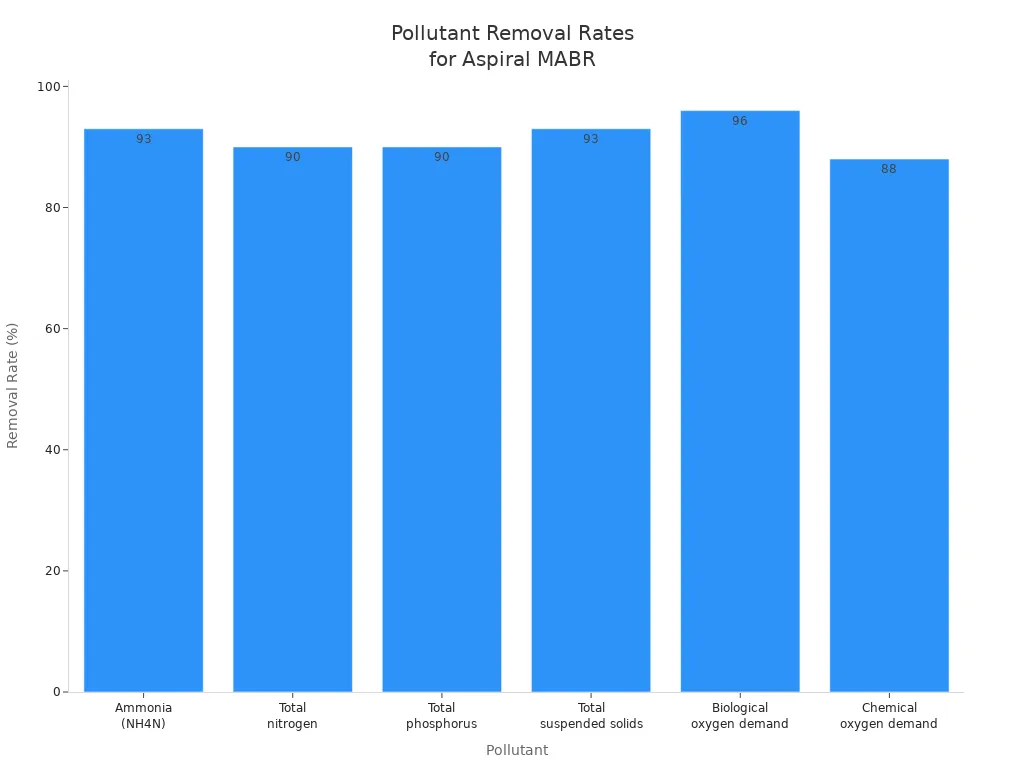
Fluence Corporation’s Aspiral MABR system uses membrane aerated biofilm reactor technology. The plant removes ammonia, nitrogen, phosphorus, suspended solids, and organic matter at high rates. Operators see typical influent ammonia levels of 45 mg/L drop to less than 3 mg/L, with removal rates above 93%. Total nitrogen and phosphorus removal rates exceed 90%. Biological oxygen demand drops from 300 mg/L to less than 10 mg/L, and chemical oxygen demand falls from 600 mg/L to below 70 mg/L.
| Pollutant | Typical Influent | Typical Effluent | Removal Rate |
|---|---|---|---|
| Ammonia (NH4N) | 45 mg/L | <3 mg/L | >93% |
| Total nitrogen | 55 mg/L | <5 mg/L | >90% |
| Total phosphorus | 10 mg/L | <1 mg/L | >90% |
| Total suspended solids | 350 mg/L | <10 mg/L | >93% |
| Biological oxygen demand | 300 mg/L | <10 mg/L | >96% |
| Chemical oxygen demand | 600 mg/L | <70 mg/L | >88% |
The Aspiral MABR system offers scalability and flexibility. Operators can expand decentralized systems as populations grow. The modular design allows for phased installation and easy adaptation to community needs. Packaged in standard shipping containers, the system ships globally and deploys quickly. The design minimizes noise and odors, ensuring comfort for nearby communities.
| Feature | Description |
|---|---|
| Scalability | Decentralized systems can be expanded with population growth, allowing for phased installation. |
| Flexibility | Designed to meet specific community needs, providing adaptability in urban settings. |
| Modular Design | Systems can be added or removed based on changing community requirements, enhancing flexibility. |
| Global Shipping | Packaged in standard shipping containers for easy transport worldwide. |
| Minimal Disturbance | Designed to minimize noise and odors, ensuring community comfort during operation. |
| Quick Deployment | Can be rapidly deployed to meet urgent wastewater management needs in urban areas. |
Evoqua’s BioMag System uses magnetite to boost biological treatment. Magnetite increases biomass concentration in reactors, which raises treatment capacity and improves effluent quality. Operators maintain the existing plant footprint while achieving higher performance. The system supports sustainability by enhancing biological processes and reducing the need for new construction.
Tip: Magnetite technology helps plants reach higher efficiency without expanding their physical footprint.
Aquatech’s AquaSure Plant delivers reliable performance for industrial sewage treatment plant operations. In 2024, the plant generated US$ 53 million in revenue, with 58% coming from international markets. Notable customers include Dubai Health Authority and Hamad Medical Corporation. The plant’s design supports large-scale operations and meets strict regulatory standards.
| Metric | Value |
|---|---|
| 2024 Revenue | US$ 53 million |
| International Revenue Share | 58.00 % |
| Notable Customers | Dubai Health Authority, Hamad Medical Corporation |
Industrial sewage treatment plants vary in efficiency, scalability, and environmental impact. Decision-makers often compare these systems to find the best fit for their operations. The following table highlights key features of the leading plants in 2026:
| Plant Name | Pollutant Removal | Energy Use | Cost Efficiency | Scalability | Environmental Impact |
|---|---|---|---|---|---|
| Mejec Johkasou-SB | Very High | Low | Excellent | Modular | Minimal |
| Veolia Actiflo | High | Moderate | Good | Flexible | Low |
| SUEZ Aquazur | High | Low | Good | Large-scale | Low |
| Xylem Wedeco UV | Moderate | Very Low | Excellent | Flexible | Minimal |
| Fluence Aspiral MABR | Very High | Low | Good | Modular | Minimal |
| Evoqua BioMag | High | Moderate | Good | Existing | Low |
| Aquatech AquaSure | High | Moderate | Good | Large-scale | Low |
Note: Cleaner production practices and waste minimization initiatives play a vital role in reducing pollution from industrial effluents. Regulatory authorities worldwide set discharge standards, but effectiveness depends on the volume and quality of effluent and the efficiency of each industrial sewage treatment plant.
Industrial effluents continue to increase pollution, especially in rapidly industrializing regions.
Many countries, such as India, face a gap between treatment capacity and actual effluent volume, particularly among smaller enterprises.
Adopting advanced treatment technologies and sustainable practices helps industries meet regulatory standards and protect the environment.
Decision-makers should review these comparisons to select a plant that matches their operational needs and local regulations. Plants with modular designs offer flexibility for future expansion, while those with low energy consumption reduce long-term costs.
Food processing plants generate wastewater with high organic content and variable loads. Operators often select systems that handle load fluctuations and maintain energy efficiency. Moving Bed Biofilm Reactor (MBBR) technology works well in this sector. MBBR systems use modular designs and adapt to changing production schedules. They help facilities meet strict discharge standards and reduce operational costs.
Chemical manufacturing produces complex effluents with hazardous substances. Facilities in this industry require advanced treatment solutions. Membrane Bioreactor (MBR) technology provides ultra-clear effluent and supports zero liquid discharge (ZLD) setups. MBR systems meet stringent regulatory requirements and fit in space-limited locations. Operators value the ability to reuse treated water within the plant.
Textile and apparel factories discharge large volumes of colored and chemical-laden wastewater. Industrial sewage treatment plant solutions for this sector focus on custom treatment processes. Plants use advanced oxidation and filtration to remove dyes and chemicals. Compliance with pollution control norms remains a top priority.
Pharmaceutical facilities produce effluents with high concentrations of active compounds. Treatment plants for this industry use specialized biological and chemical processes. Operators rely on systems that ensure regulatory compliance and protect public health. Modular designs allow for easy upgrades as regulations evolve.
Electronics manufacturing generates wastewater with heavy metals and toxic substances. Facilities need treatment plants that remove metals and minimize environmental impact. Technologies such as MBR and advanced filtration provide reliable results. Operators choose systems that support water reuse and reduce hazardous waste.
| Technology | Best Suited For | Key Features |
|---|---|---|
| MBBR | Food processing, commercial buildings, hospitals | Energy-efficient, handles load fluctuations, modular design |
| MBR | Chemical manufacturing, electronics, ZLD setups | Ultra-clear effluent, meets strict standards, ideal for reuse |
| Industrial STP | Textiles, food processing, pharmaceuticals | Custom treatment, high-volume effluents, strict compliance |
Tip: Selecting the right industrial sewage treatment plant depends on the specific contaminants and regulatory needs of each industry.
New technologies continue to shape the future of wastewater management. Many experts see artificial intelligence (AI) and machine learning as game changers. These tools help operators predict equipment failures and optimize treatment processes. Smart sensors now monitor water quality in real time. They send alerts when pollution levels rise. Some companies use advanced membranes that filter out even the smallest particles. Others test electrochemical treatment, which uses electricity to break down pollutants.
Note: AI-driven monitoring systems can reduce human error and improve plant safety.
A few plants have started using algae-based systems. These systems remove nutrients from wastewater and produce useful byproducts. Modular treatment units also gain popularity. They allow facilities to add or remove capacity as needed.
The next generation of industrial sewage treatment plant designs will focus on higher efficiency. Many plants aim to lower energy use by upgrading pumps and aeration systems. Some facilities plan to recover more resources, such as clean water and biogas, from wastewater. Operators expect new membranes and catalysts to boost pollutant removal rates.
| Improvement Area | Expected Benefit |
|---|---|
| Energy Efficiency | Lower operating costs |
| Resource Recovery | More water reuse |
| Automation | Fewer manual errors |
| Modular Design | Easier expansion |
Many experts believe these changes will help plants meet stricter regulations and protect the environment. The future looks bright for facilities that invest in innovation and sustainability.
Mejec Johkasou-SB leads as the most efficient industrial sewage treatment plant in 2026. Facilities should match plant features to their industry needs. Operators must consider future technology trends. Choosing the right industrial sewage treatment plant ensures compliance, cost savings, and environmental protection.
Match plant features to industry needs
Consider future technology trends
Efficiency depends on energy use, pollutant removal rates, operational costs, and adaptability. Plants with advanced technology and modular designs often achieve the highest efficiency scores.
Industries review wastewater type, regulatory standards, and plant scalability. They select systems that match their operational needs and future growth plans.
Yes. Many modern plants support water reuse for irrigation, cooling, or cleaning. This practice reduces environmental impact and saves resources.
Innovations in Heat Exchanger Manufacturing Boost Industrial Efficiency
The Role of Plate Air Preheaters in Enhancing Efficiency
Enhancing Energy Efficiency in Industry with Condensate Coolers
A Comprehensive 2025 Overview of Semi-welded Plate Heat Exchangers
Essential Industrial Checkweighers for Every Food Processing Facility

We provide you with comprehensive foreign trade solutions to help enterprises achieve global development
Mejec Redefines the Outdoor Hydration Experience. ...
Mejec Scavenger Household Sewage Treatment Plant (...
Mejec Containerized MABR Equipment is an innovativ...

Whether your venue is a specialty café in pursuit ...
Select the most popular foreign trade service products to meet your diverse needs
Select the most popular foreign trade service products to meet your diverse needs





User Comments
Service Experience Sharing from Real Customers
Michael Chen
Environmental EngineerThis industrial sewage treatment system has revolutionized our plant's efficiency. The modular design allowed for seamless integration, and the reduction in chemical sludge has cut our disposal costs by 30%. Highly reliable and backed by excellent technical support.
Sarah Johnson
Plant Operations ManagerAs a manager in food processing, compliance is critical. This treatment solution consistently meets stringent discharge standards. The automated monitoring system provides real-time data, giving us peace of mind. Minor learning curve for the interface, but overall an outstanding investment.
David Rodriguez
Maintenance SupervisorThe durability and low maintenance of this equipment are impressive. After 18 months in our metal finishing plant, downtime has been negligible. The robust construction handles our high-heavy-metal-load wastewater perfectly. A game-changer for our operational continuity.
Lisa Wang
Sustainability DirectorImplementing this advanced treatment plant was key to our corporate sustainability goals. The energy recovery feature has reduced our carbon footprint significantly, and the treated water quality allows for safe reuse in non-potable applications. A forward-thinking solution for any eco-conscious industrial facility.