




How to Choose the Best Residential Wastewater Treatment System
Find the best residential wastewater treatment sys...
More


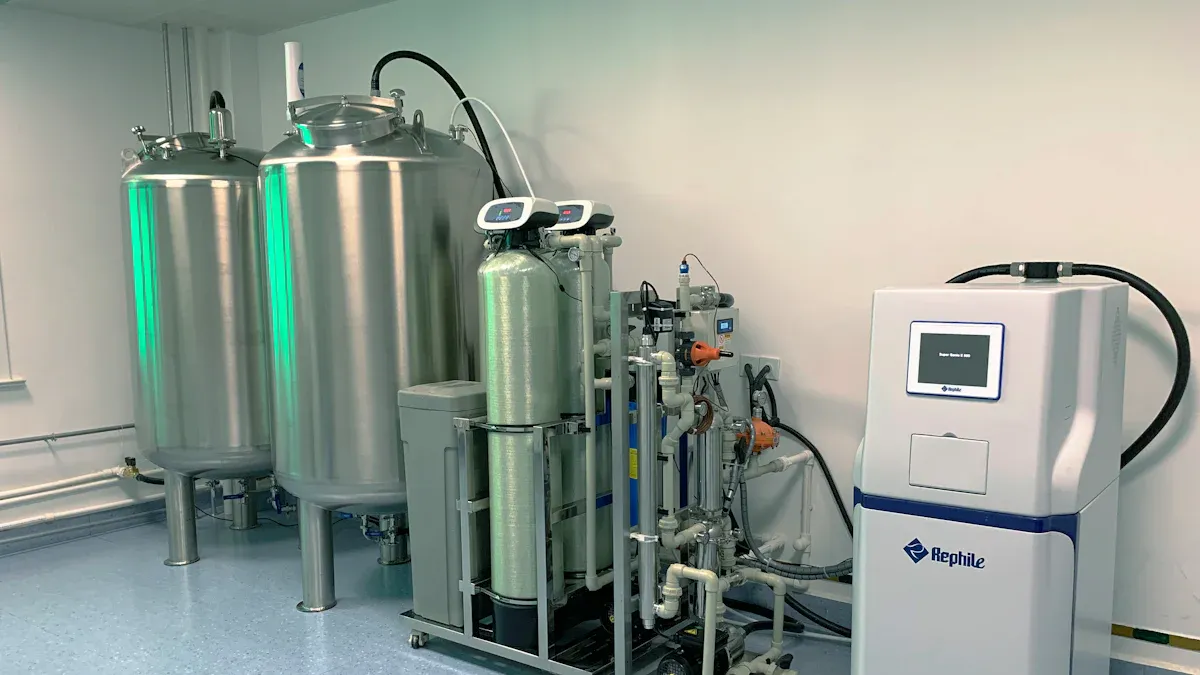
You face several challenges when planning hotel wastewater treatment. You need accurate information about water supply and demand. You must size your system correctly to prevent inefficiencies. You also ensure water quality and safety for your guests. Careful design helps you create a reliable and effective solution.
Effective hotel wastewater treatment starts with coagulation and flocculation, which helps remove pollutants and reclaim over 95% of water.
Regular maintenance and monitoring of water treatment systems ensure guest safety and compliance with health regulations.
Design your treatment plant to meet specific hotel needs, considering factors like size, guest capacity, and unique features to ensure consistent water quality.
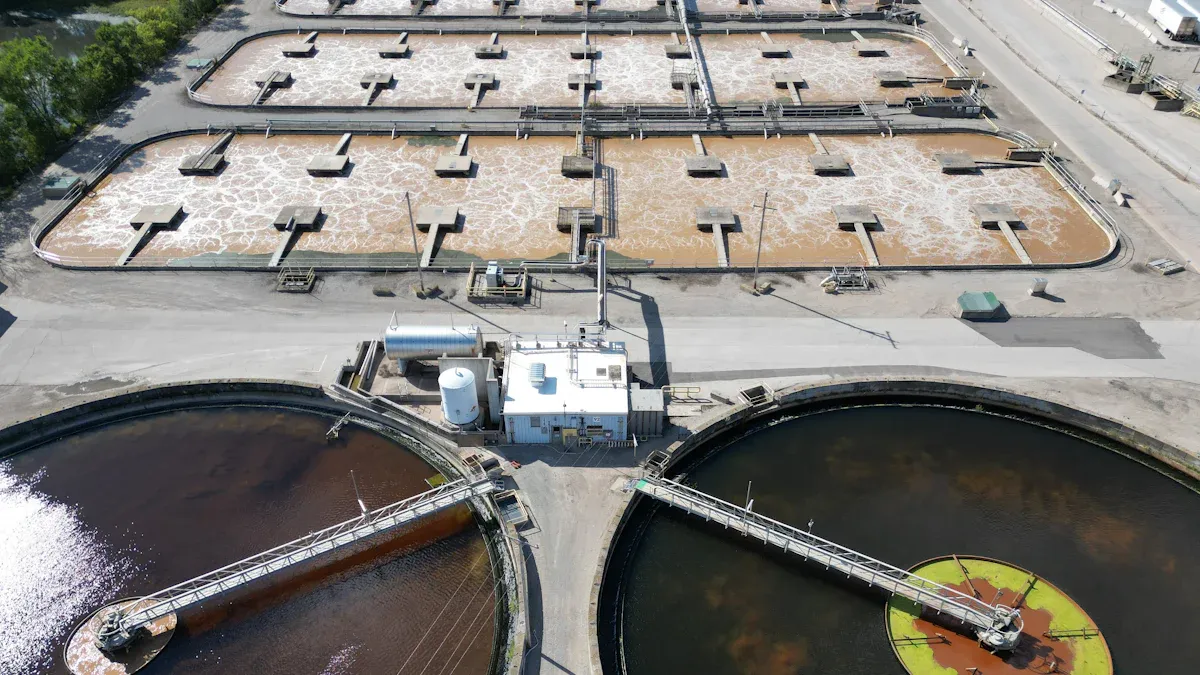
You start the hotel wastewater treatment process by adding chemicals that help small particles stick together. This step forms larger clumps called flocs. These flocs settle faster and make it easier to remove pollutants. When you combine coagulation and flocculation with other methods, you can reclaim over 95% of water. This high rate helps you keep your hotel’s water clean and safe.
After flocculation, you let the water sit in a tank. The heavy flocs sink to the bottom. You remove these solids, which reduces the amount of pollution in the water. Sedimentation makes the next steps more effective.
You use filters to trap any remaining particles. Hotels often use sediment filters, activated carbon filters, and reverse osmosis membranes. These systems remove sediments, chlorine, odors, minerals, and salts. You also improve water taste and quality for your guests.
Common filtration systems in hotels:
Sediment filters
Activated carbon filters
Reverse osmosis membranes
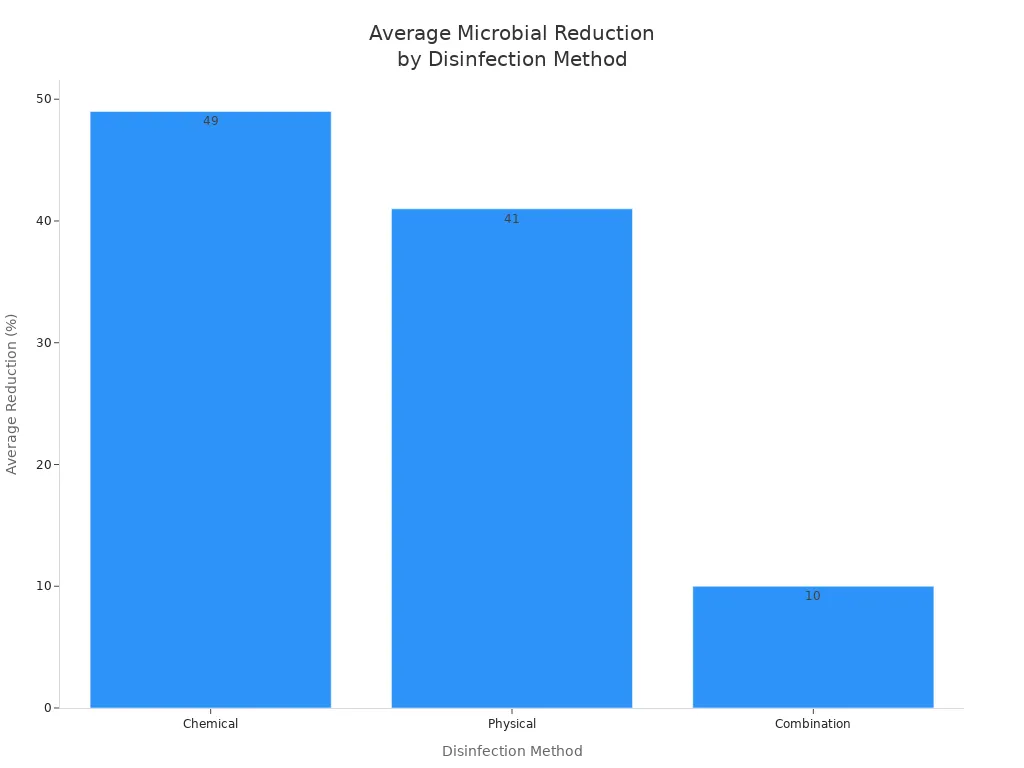
You disinfect the water to kill harmful microbes. Chemical and physical methods reduce microbial contaminants by up to 49% and 41%, respectively. Chemical disinfection removes over 91% of Legionella bacteria. You can see the effectiveness in the chart below:
You store treated water in tanks and distribute it throughout the hotel. You need efficient systems to meet peak hot water demand in the morning and at night. Modular water heaters adjust output based on demand. You keep water temperatures above 140°F to prevent bacteria growth. Mixing valves help you maintain safe temperatures at fixtures.
Tip: Regularly check your storage and distribution systems to ensure safety and efficiency.
| Aspect | Hotel Wastewater Treatment | Municipal Systems |
|---|---|---|
| Treatment Type | Decentralized small plants serving hotels | Centralized large-scale treatment plants |
| Wastewater Characteristics | High variability due to tourism | More consistent due to larger population |
| Treatment Process | Extended aeration activated sludge | Various processes including primary, secondary, and tertiary treatment |
| Challenges | Shock loads, sludge bulking, flow fluctuations | More stable operation, but higher costs |
| Sludge Management | Difficult and expensive to manage | Established methods for stabilization and dewatering |
| Energy Consumption | Up to 80% higher specific energy consumption | More efficient due to scale |
You must protect your guests and staff from health risks. If you do not manage hotel wastewater treatment properly, you increase the risk of disease outbreaks. Poor water management can harm people who work or live near your hotel. Contaminated water can also affect food safety and lead to the spread of dangerous diseases. Some of the health risks include:
Outbreaks of communicable diseases
Health hazards for staff and nearby residents
Disease transmission through contaminated food
Zoonotic diseases
Waterborne illnesses like malaria, cholera, dysentery, and typhoid
Note: Regular water testing and proper disinfection help you prevent these risks and keep everyone safe.
You need to deliver clean water every day. Consistent water quality keeps your guests happy and protects your reputation. Hotels must follow strict standards for water safety. You should use real-time monitoring and keep detailed records of your water treatment process. Regular testing and compliance with regulations like the Safe Drinking Water Act are essential. Local health departments and state agencies may also inspect your systems.
| Factor | Impact on Guest Satisfaction |
|---|---|
| Water quality in rooms and amenities | High |
| Functioning of showers, pools, and spas | High |
| Consistent water flow | High |
| Cleanliness supported by water treatment | High |
You face unique challenges in managing water use. The size of your hotel, the number of guests, and the features you offer all affect your water needs. Hotels with pools, spas, or golf courses use more water than smaller hotels. When your occupancy rate rises, your water demand increases. You must design your hotel wastewater treatment system to handle these changes and keep service consistent.
You need to plan where to place your hotel wastewater treatment plant. Many hotels use underground spaces to save room. Landscaped utility areas help blend the plant with the environment. Some hotels use fake rock covers or green roofing to improve visual appeal.
| Spatial Requirement | Description |
|---|---|
| Underground Space | Utilizes below-ground areas to reduce footprint |
| Landscaped Utility Areas | Integrates treatment facilities with the environment |
| Architectural Aesthetics | Features like fake rock covers and green roofing for visual appeal |
You should design your facility to match nearby buildings. Use attractive fencing and bury tanks to limit visibility. Offset buildings and arrange structures for easy access and future expansion. Place equipment to minimize piping and improve efficiency. Design roadways for heavy vehicles and safe access.
Match materials and style with nearby buildings
Use fencing and landscaping to blend with surroundings
Bury tanks and preserve natural features
Separate buildings for function and appearance
Optimize layout for efficiency and future growth
You must follow safety standards and protect the environment. Make sure your plant meets all laws and regulations. Invest in advanced systems to show your commitment to sustainability. These systems can attract eco-conscious guests.
Follow safety standards
Protect the environment
Comply with regulations
You can use ozone generators and biofilters to control smells. Modular systems help keep noise low. Silent operation reduces complaints and lowers costs by using fewer chemicals.
Ozone generators for odor control
Biofilters for managing smells
Modular systems for quiet operation
Choose equipment that fits your hotel’s needs. Pick reliable pumps, filters, and tanks. Modular systems allow easy upgrades and maintenance.
You can select designs that enhance your hotel’s look. ECOSTP systems offer compact and attractive solutions. These systems fit your property’s unique shape and save space.
You need to manage treated water safely. Discharge water according to local rules. Reuse treated water for landscaping or cleaning when possible.
You must follow all rules for hotel wastewater treatment. Meeting regulations helps you protect the environment and reuse water efficiently. Good compliance makes it easier to add new systems and get expert support.
| Compliance Aspect | Description |
|---|---|
| Compliance with CPCB norms | Adhere to regulations for proper treatment |
| Improved environmental footprint | Reduce impact on the environment |
| Increased water reuse efficiency | Reuse treated water more effectively |
| Easy integration | Add systems to existing plumbing easily |
| Expert support | Get help for maintenance and compliance |
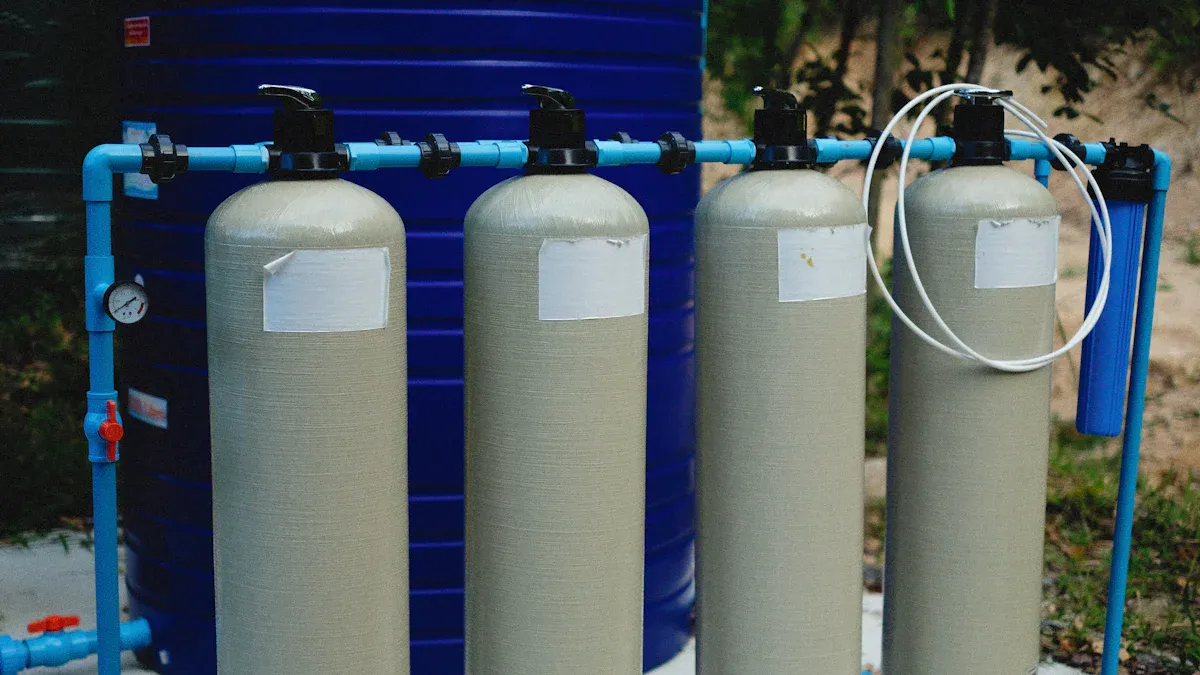
You begin your design by understanding your hotel's water needs. You must estimate how much wastewater your hotel will produce each day. The number of rooms, restaurants, and amenities all affect this number. For example, a 300-room hotel can generate about 50,000 gallons of wastewater per day. You also need to consider extra water use from restaurants and bars.
| Hotel Size | Estimated Wastewater Volume (gallons/day) | Additional Factors |
|---|---|---|
| 300 rooms | 50,000 | 75 gallons/bed/day + 12 gallons/seat/meal for restaurants/bars |
You should always adjust your estimates for peak seasons and special events. This helps you avoid system overloads and ensures reliable service.
You need to plan your plant layout for smooth operation. Place equipment to allow easy access for maintenance. Arrange tanks and pipes to reduce energy use and prevent bottlenecks. You can use several process optimization techniques to improve efficiency and save money.
| Process Area | Optimization Approach | Benefits |
|---|---|---|
| Pre-Treatment | Regular screen cleaning, flow equalization, pH balancing | Prevents blockages and downstream overload |
| Aeration System | Adjust air flow based on DO sensors, install VFDs | Reduces energy cost up to 30–40% |
| Biological Treatment | Monitor MLSS, SRT, and nutrient ratios | Improves treatment efficiency and stability |
| Clarification | Optimize return sludge flow, prevent short-circuiting | Enhances solid-liquid separation |
| Chemical Dosing | Automate dosing using real-time monitoring | Minimizes chemical wastage |
| Sludge Handling | Optimize sludge dewatering and digestion | Reduces disposal cost and odor |
| Instrumentation & Control | Use SCADA and sensors for data-driven control | Enables real-time optimization and remote management |
Tip: Use automated controls and sensors to monitor your system. This helps you catch problems early and keep your plant running smoothly.
You must size your equipment to match your estimated wastewater volume. Use process modeling tools to simulate how your plant will perform. These tools help you choose the right tank sizes, pump capacities, and filter types. You can test different scenarios, such as high occupancy or special events, to make sure your system can handle changes in demand. Proper sizing prevents overflows and reduces wasted energy.
You can make your hotel water treatment plant more sustainable by using smart strategies. Responsible wastewater management helps you save resources and protect the environment. You can install filtration systems at entry points or at specific locations to ensure clean water throughout your hotel. Water softening systems reduce hardness and prevent scale buildup, which improves guest comfort. Rainwater capture systems help you conserve water, as seen in hotels like the Sofitel Noosa Pacific Resort.
Filtration systems at entry or use points
Water softening to prevent scale and improve guest experience
Rainwater capture for irrigation or cleaning
The Mövenpick Petra hotel reduced its water use from 45 million liters in 2019 to 33 million liters in 2023 by using these strategies. You can achieve similar results by focusing on conservation and efficiency.
You need to plan your budget carefully. The cost of installing and running a water treatment plant depends on your hotel's size and water needs. Here is a table to help you understand typical costs:
| Applicable fields | Reference water production | Set price range | Applicable scenarios |
|---|---|---|---|
| Small and medium-sized office (less than 50 people) | Flow rate 50-400 gallons (G) | $1000 | Office area, small hotel |
| Medium and large enterprises/hotels (over 200 people) | 1-10 tons/hour | $2000-4000 | Large office buildings, medium-sized hotels |
| Large scale factories/commercial areas (with over 500 people) | Over 50 tons/hour | $20000 to 70000 | Industrial areas, large-scale trade complexes |
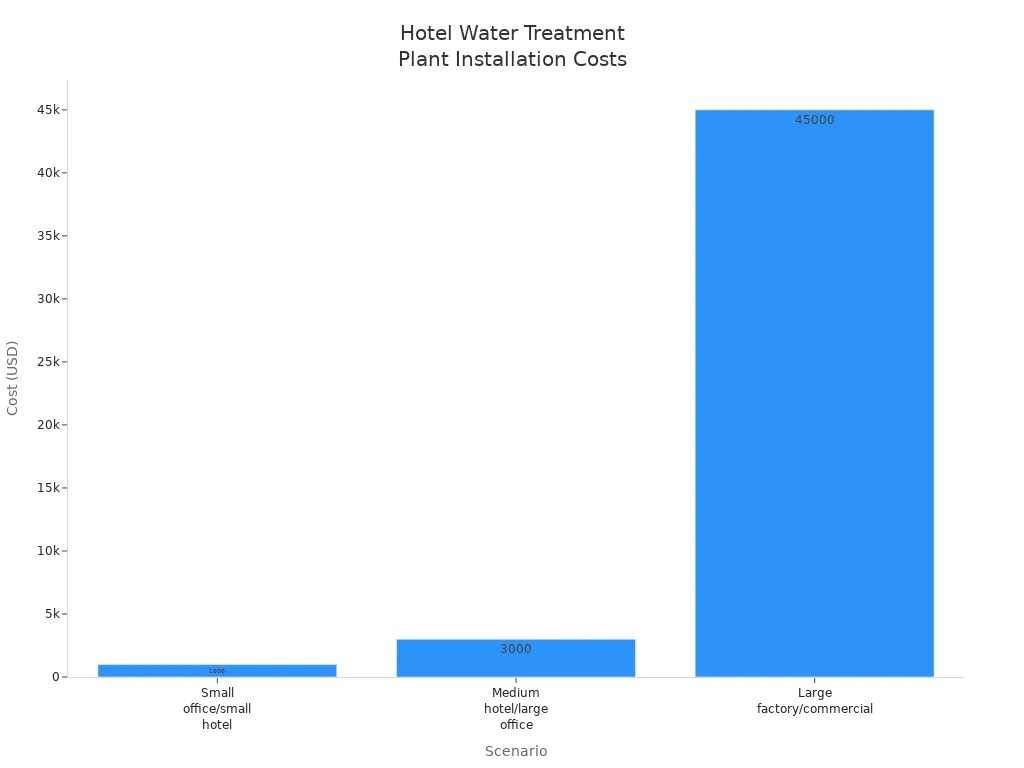
Other factors can affect your costs:
Craftsmanship: Advanced technology and extra modules can raise costs from $3,000 to $8,000.
Raw water quality: Poor water quality may require more expensive pre-treatment.
Brand and service: Well-known brands may cost 15%–25% more but offer better support.
If you use bottled water for guests, your costs can exceed $20,000 per year for a medium-sized hotel. Investing in a commercial water purifier can save you more than 60% over five years.
You must keep your plant running smoothly to ensure safe water. Regular maintenance prevents breakdowns and extends equipment life. Here are some best practices:
Replace pre-filters every six to twelve months.
Clean reverse osmosis membranes every three to six months.
Sterilize the system to remove microbes.
Inspect and replace seals to prevent leaks.
Monitor water quality to catch problems early.
Note: A good maintenance schedule protects your investment and keeps your guests safe.
You need to manage risks to keep your water safe and your plant reliable. Create a water management plan that follows CDC and ASHRAE 188 guidelines. Control water temperature to prevent bacteria growth. Flush water lines in unused rooms. Use chlorine or other disinfectants to treat water systems, including pools and spas. Test for Legionella and other microbes, especially in high-risk areas. Clean and maintain all water features.
| Control Measure | Example |
|---|---|
| Water Management Plan | Develop and follow a plan based on CDC and ASHRAE 188 guidelines. |
| Temperature Control | Keep hot water >60°C (140°F) and cold water <20°C (68°F) to minimize growth. |
| Regular Flushing | Flush water lines in unoccupied rooms or unused outlets (e.g., showers, taps). |
| Disinfection | Use chlorine or other biocides to treat water systems, including cooling towers and spas. |
| Testing | Perform routine Legionella testing of water systems, especially in high-risk areas. |
| Maintenance | Clean and maintain hot tubs, decorative fountains, HVAC systems, and other water features. |
Conduct a Legionella risk assessment to find and fix risks.
Choose a reliable provider for risk assessments.
Remove storage tanks if possible to reduce ongoing risks.
Callout: Good risk management keeps your guests safe and protects your hotel's reputation.
You must follow all rules for hotel wastewater treatment. Local and national agencies set standards for water quality and discharge. These rules protect public health and the environment. You should check the latest guidelines from your city, state, and country. Some areas require you to get permits before you build or upgrade your system. You may also need to test your water and report the results. If you do not follow these rules, you can face fines or even have to close your hotel.
Tip: Contact your local environmental office to learn about the permits and standards you need to meet.
You need to keep clear records for every part of your water treatment process. Good documentation helps you track system performance and spot problems early. You should save test results, maintenance logs, and any changes you make to your system. Many hotels use digital tools to store and organize these records. If inspectors visit, you can show your records to prove you follow the rules.
| Record Type | Why It Matters |
|---|---|
| Test results | Show water meets safety limits |
| Maintenance logs | Prove regular system care |
| Permit documents | Confirm legal compliance |
You must train your staff to run and maintain your water treatment plant. Well-trained workers know how to spot issues and fix them fast. You should hold regular training sessions and update your team on new rules or equipment. Ongoing maintenance keeps your system safe and efficient. When you invest in your staff, you protect your guests and your business.
Note: A skilled team and a good maintenance plan help you avoid costly repairs and keep your hotel running smoothly.
You can design a hotel water treatment plant with a clear, step-by-step plan. You meet safety standards and keep guests happy. You improve efficiency and protect your business. > Remember: Consult experts for custom solutions. A well-designed system gives you peace of mind and long-term savings.
You must focus on disinfection. This step kills harmful microbes and keeps your guests safe. Regular testing helps you confirm water quality.
You should check and clean filters every six months. Inspect membranes every three months. Keep a maintenance log for best results.
| Use Case | Benefit |
|---|---|
| Landscaping | Saves water |
| Cleaning | Cuts costs |
| Toilets | Reduces waste |
You can reuse treated water for these tasks.
Simplifying Your Experience With AHRI 400/401 Heat Exchangers
Your 2025 Handbook for Semi-Welded Plate Heat Exchangers
Benefits of Selecting a Self-Priming Water Pump System
Comparing EHEDG Guidelines With 3A SSI Standards for Hygiene
Innovative Materials Transforming the Heat Exchanger Industry

We provide you with comprehensive foreign trade solutions to help enterprises achieve global development
.webp)
Mejec containerized seawater desalination system i...
Guard your home's water at its source with the Who...
The Mejec High-End Commercial Direct-Drinking Mach...
Experience effortless purity with our advanced RO ...
Select the most popular foreign trade service products to meet your diverse needs
Select the most popular foreign trade service products to meet your diverse needs





User Comments
Service Experience Sharing from Real Customers
Michael Chen
Facilities ManagerThis compact MBR system revolutionized our hotel's wastewater management. It's efficient, space-saving, and meets all local discharge standards. Reduced our environmental footprint significantly.
Sarah Johnson
Sustainability DirectorThe greywater recycling unit has been a game-changer for our resort. We're now reusing water for landscape irrigation, cutting our freshwater consumption by 40%. Reliable and easy to integrate.
David Rodriguez
Chief EngineerInstalled the advanced electrocoagulation system last year. Exceptionally effective at removing contaminants from laundry and kitchen wastewater. Low maintenance and outstanding performance.
Emily Watson
Hotel General ManagerThe packaged biological treatment plant solved our long-standing compliance issues. It's robust, handles peak loads well, and the support team is responsive. A solid investment for any hotel.