




.webp)
What is MBBR for sewage treatment plant?
MBBR sewage treatment plant uses biofilm carriers ...
More


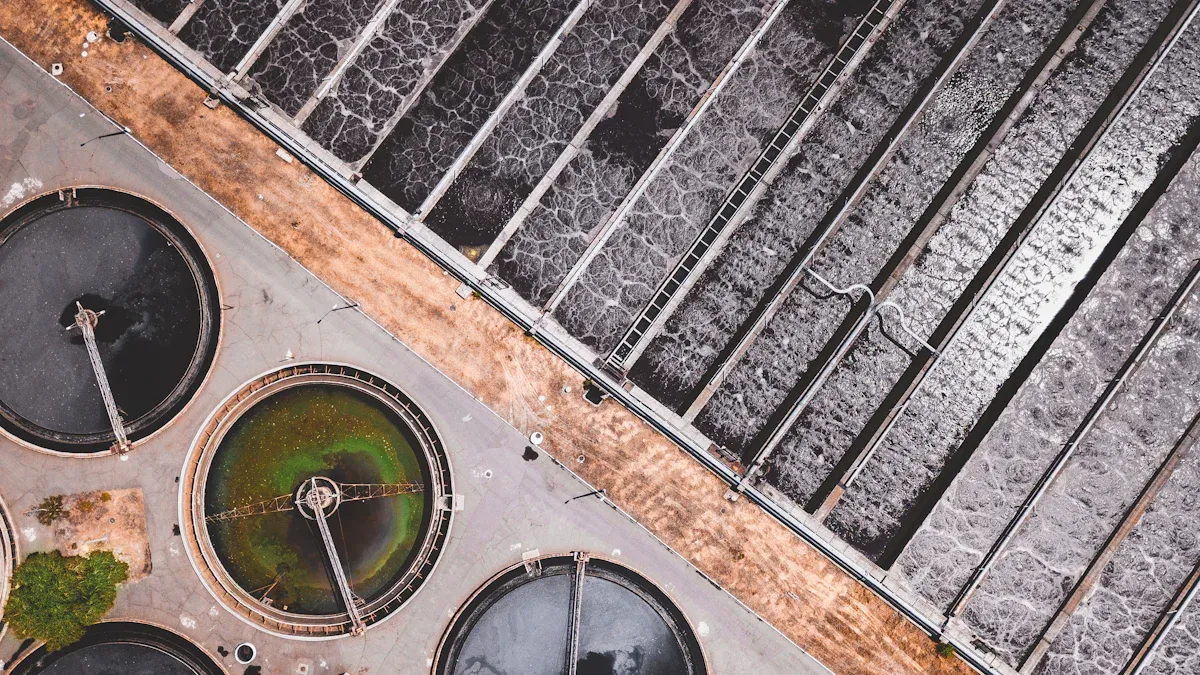
When you look at sewage treatment plant water before cleaning, you find many contaminants. These can include pharmaceuticals, pesticides, and organic pollutants like caffeine or fipronil sulfide. Scientific methods such as screening, sedimentation, and disinfection help remove these substances. Today, about 56% of global wastewater gets treated safely.
Sewage treatment involves multiple stages to remove contaminants, ensuring water is safe for the environment and public health.
Preliminary treatment is crucial; it removes large debris to protect equipment and improve the efficiency of the cleaning process.
Biological treatment uses microorganisms to break down waste, making the water cleaner before it undergoes advanced filtration and disinfection.
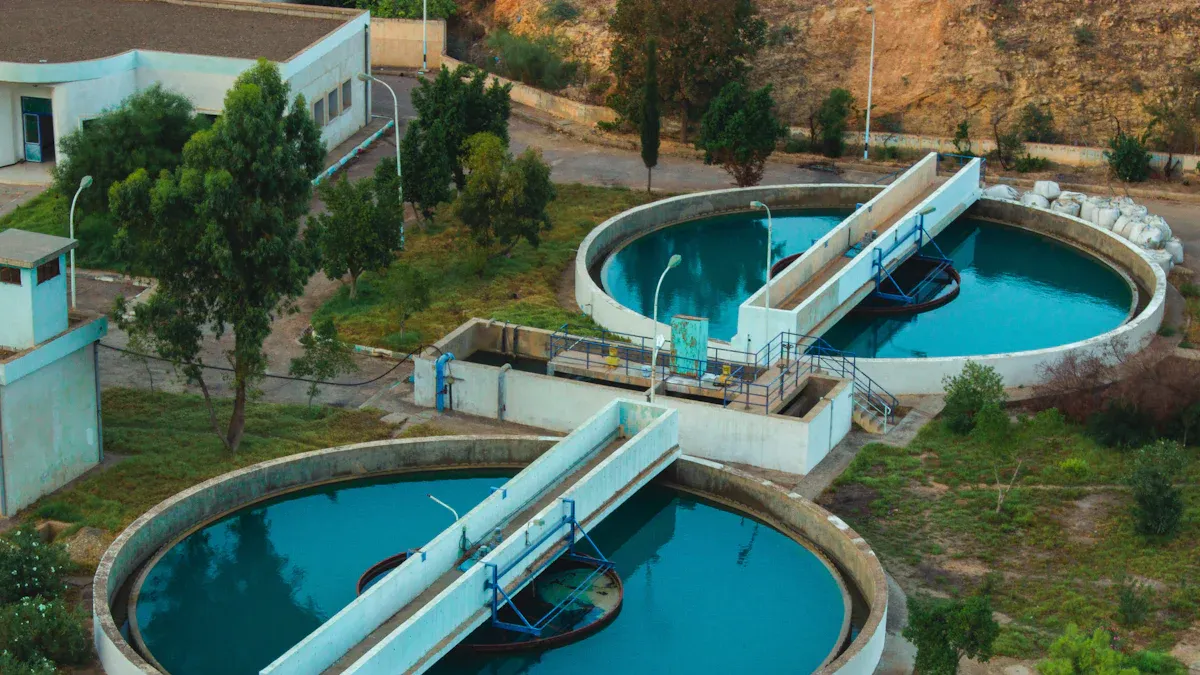
Before you can clean sewage treatment plant water, you need to remove the biggest and heaviest materials. This step is called preliminary treatment. It prepares the water for the next stages by getting rid of large debris and inorganic materials. If you skip this step, large objects can damage machines or block pipes later in the process.
When sewage treatment plant water first enters the facility, it passes through screens. These screens act like giant filters. They catch items such as sticks, rags, plastic, and even small toys. Machines remove these objects so they do not cause problems later. By taking out these large pieces, you help protect the equipment and make the rest of the cleaning process easier.
Tip: Regular maintenance of screens keeps the system running smoothly and prevents breakdowns.
After screening, the water flows into grit chambers. Here, heavy particles like sand, gravel, and small stones settle to the bottom. Lighter materials stay in the water and move on to the next step. Grit removal is important because these tiny rocks can wear down pumps and pipes.
You can see how well grit chambers work by looking at the table below. It shows how different types of grit chambers remove particles of various sizes:
| Particle Size (μm) | Rotational Flow Grit Chamber (%) | Aerated Grit Chamber (%) |
|---|---|---|
| 350 | 95 | 92 |
| 250 | 92 | 80 |
| 200 | 90 | 95 |
| 150 | 85 | 42 |
| 100 | 75 | 0 |
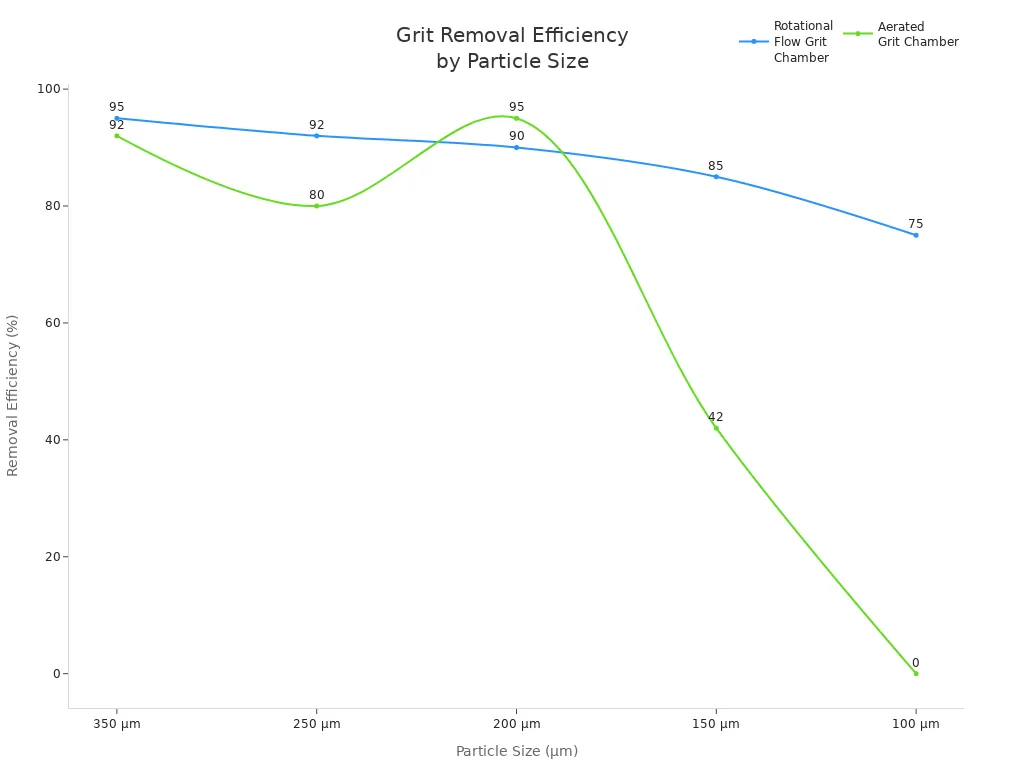
Grit chambers remove most large particles, but smaller particles can still pass through. This is why you need more treatment steps after preliminary treatment.
When you reach the primary treatment stage, you see one of the most important machines in action: the sedimentation tank. This tank uses gravity to help clean sewage treatment plant water. As the water slows down, heavier particles sink to the bottom. You can think of it as a big, quiet pool where solids settle out.
Here is what happens inside a sedimentation tank:
The tank removes suspended solids and organic matter from the water.
Gravity pulls the solids down, separating them from the liquid.
This step makes the next treatment stages work better.
By removing solids early, you help the whole system run more efficiently.
The water that leaves the tank looks much clearer and is ready for further cleaning.
Note: Sedimentation tanks play a key role in making sure the rest of the treatment process works well.
You might wonder how much solid material these tanks can remove. The answer depends on the plant, but most sedimentation tanks remove between 50% and 70% of suspended solids. Take a look at this table to see what different sources report:
| Source | Percentage of Suspended Solids Removed |
|---|---|
| Open University | 60-70% |
| DMMWRA, IA | 50-70% |
| Shanley Pump | 60% |
Plants use several methods to remove suspended solids. The most common ones include:
| Method | Description |
|---|---|
| Gravity Sedimentation | Solids settle at the bottom because they are heavier than water. |
| Filtration | Filters catch small particles that do not settle out. |
| Coagulation and Flocculation | Chemicals help tiny particles stick together, making them easier to remove. |
By removing most of the solids early, you make sure that sewage treatment plant water is much cleaner before it moves to the next stage.
You now reach the stage where living organisms help clean the water. In secondary treatment, you use biological processes to remove dissolved and suspended organic matter from sewage treatment plant water. Microorganisms such as bacteria and protozoa play a big role. They eat the waste and break it down into simpler substances. You can see the main biological processes in the table below:
| Biological Process | Description |
|---|---|
| Microorganisms | Bacteria and protozoa consume biodegradable organic matter from sewage. |
| Aerobic Process | Microorganisms use oxygen to break down organic matter. |
| Anaerobic Process | Microorganisms work without oxygen to break down organic matter. |
| Fixed Film Systems | Microorganisms grow on surfaces and absorb organic matter as water flows by. |
| Suspended Film Systems | Microorganisms float in the water, absorb waste, and settle as sludge. |
You can find different systems that use these helpful microbes. Some common ones include trickling filters, rotating biological contactors, and lagoon systems. In each system, microorganisms convert organic matter into water, carbon dioxide, and ammonia. This process helps remove pollutants and makes the water much cleaner. When you add air, oxygen-using bacteria grow faster and break down more waste.
Microorganisms turn complex waste into simple substances.
They form heavier particles that settle at the bottom as secondary sludge.
You remove this sludge to keep the process working well.
You use aeration tanks to add air to the water. This step boosts the activity of microbes and improves the breakdown of contaminants. After aeration, you let the water rest in settling tanks. Here, the heavier particles sink to the bottom. Lamella settlers can remove 80% to 90% of these particles. The water that leaves this stage looks much clearer and is ready for the next treatment step.
You reach the final cleaning steps when you enter tertiary treatment. Here, advanced filtration methods remove the smallest particles and remaining contaminants from sewage treatment plant water. You can find several filtration techniques at this stage. Each method targets different types of pollutants.
| Filtration Technique | Description |
|---|---|
| Surface Filtration | Uses a filter medium to separate suspended solids through a staining process. |
| Depth or Volume Filtration | Passes wastewater through a filter bed of granular or compressible material for efficient filtration. |
| Membrane Filtration | Forces wastewater through a thin membrane under pressure, removing fine solids and pathogens. |
You may also see these common filtration systems:
Sand filtration removes suspended solids and some bacteria by passing water through sand.
Activated carbon filtration uses porous carbon to trap organic compounds and metals.
Membrane filtration eliminates fine solids, bacteria, and viruses using semi-permeable membranes.
These filtration steps help ensure the water meets strict safety standards before you move to the next stage.
After filtration, you need to disinfect the water to kill any remaining germs. Disinfection makes sure sewage treatment plant water is safe for the environment or reuse. You can choose from several methods, each with its own strengths and weaknesses.
| Disinfection Method | Effectiveness | Advantages | Disadvantages |
|---|---|---|---|
| Chlorine | Highly effective against many pathogens | Cost-effective, versatile, easy to apply | Can form harmful by-products, limited efficacy against some pathogens |
| UV Light | Effective against many microorganisms, including resistant ones | Environmentally friendly, rapid disinfection | Less effective in turbid waters, no residual effect |
| Ozone | Powerful oxidizing agent, breaks down cell walls | Effective against a wide range of microorganisms | Requires careful handling, no residual effect |
You can see how well UV treatment and chlorination work against different viruses in the chart below:
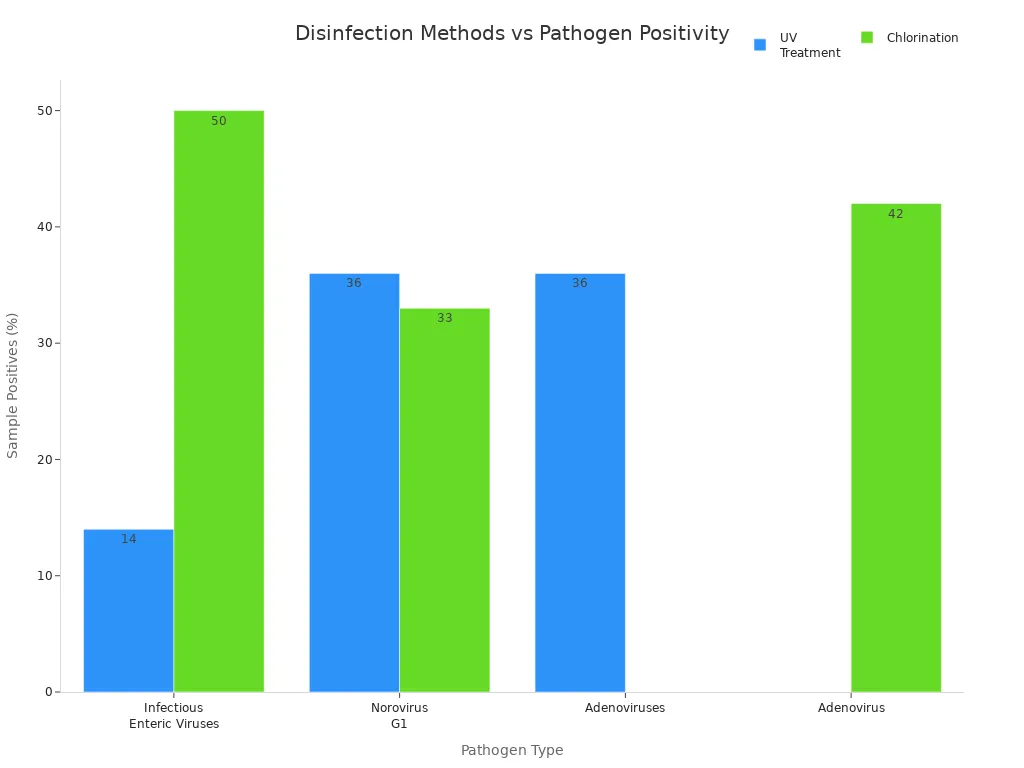
UV light kills most germs quickly and does not leave harmful chemicals behind. Chlorine works well for many pathogens but can create unwanted by-products. Ozone destroys a wide range of microorganisms but needs careful handling. By using these disinfection techniques, you make sure the treated water is safe for release or reuse.
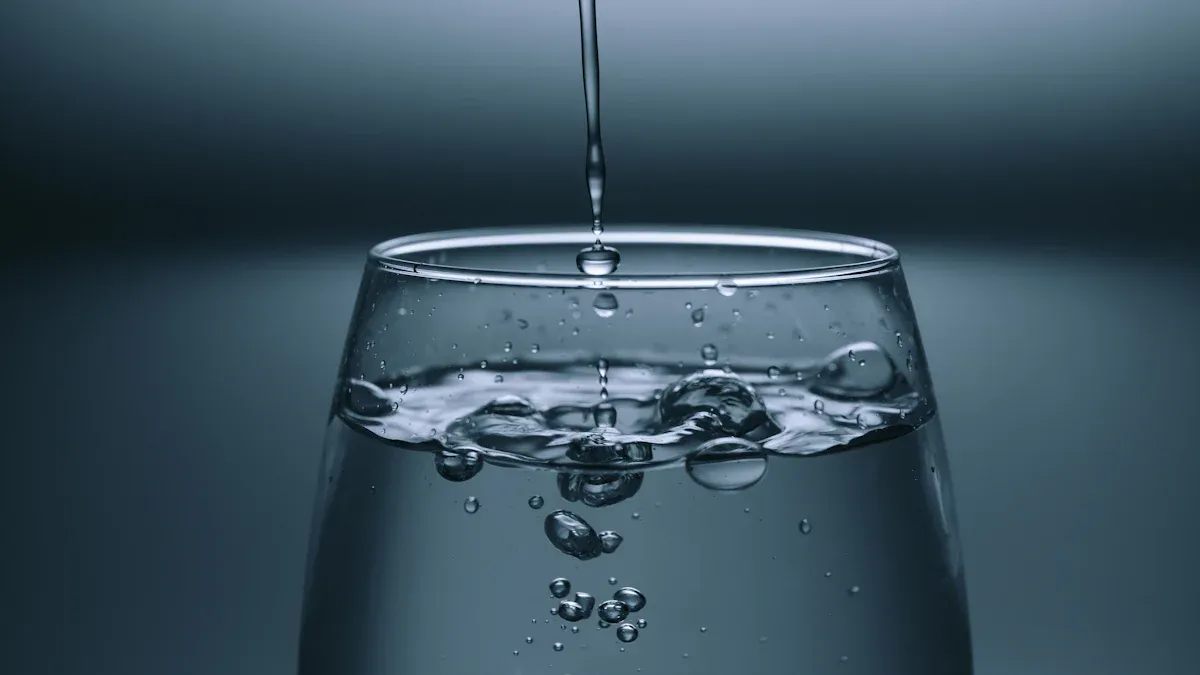
When you look at water after it leaves a sewage treatment plant, you see a big change in its quality. The treatment process removes most harmful substances and makes the water much safer for people and the environment. You can measure this improvement by checking several important water quality parameters:
BOD (Biochemical Oxygen Demand): Shows how much oxygen bacteria need to break down organic material in the water.
COD (Chemical Oxygen Demand): Tells you how much oxygen is needed to oxidize all organic matter using chemicals.
Pathogen levels: Indicate the presence of disease-causing organisms, which treatment aims to reduce as much as possible.
You can compare water quality before and after treatment using the table below:
| Water Parameter | Before Treatment | After Treatment | Efficiency Level |
|---|---|---|---|
| BOD5 | High | Low | Good |
| COD | High | Lower | Marginal |
| Nitrates | High | Moderate | Poor |
| TDS | High | Moderate | Poor |
| Chlorine | None | Present | Poor |
After treatment, the water must meet strict safety standards. These standards come from both local and international regulations. The rules set maximum allowable values for pollution indicators. This ensures that the water released from the plant does not harm people or the environment. The European Union and many countries have created uniform quality standards for treated wastewater. You can see how these standards help protect rivers, lakes, and other water bodies.
Note: Surface water quality standards act as a benchmark for deciding if treated water is safe enough to release or reuse.
Once you finish treating sewage treatment plant water, you have several options for what to do with it. The most common uses include:
Discharging the water into rivers, lakes, or oceans
Using the water for agricultural and landscape irrigation
Supplying water for industrial processes
Recharging groundwater supplies
Supporting recreational and environmental projects
You must always consider the possible environmental impacts when you release treated water into natural bodies of water. The table below shows some key concerns:
| Environmental Impact | Description |
|---|---|
| Nutrient Pollution | Treated water may still contain nitrogen and phosphorus. These nutrients can cause algae to grow too quickly, which uses up oxygen and harms fish and other aquatic life. |
| Ecological Disruption | Even after treatment, some contaminants can remain. These can upset the balance of aquatic ecosystems and harm plants and animals. |
| Need for Monitoring | Regular testing and strict rules help make sure the water stays safe and does not damage the environment. |
You play an important role in protecting the environment by following these rules and monitoring water quality. When you use treated water for irrigation or industry, you help save fresh water for drinking and other important needs. By understanding how the final state of treated water affects the world around you, you can make better choices for a healthier planet.
You see how sewage treatment plant water changes from polluted liquid to a valuable resource. Each step removes harmful substances and protects public health. The process supports safe water reuse and helps conserve natural resources.
| Benefit | Description |
|---|---|
| Public Health | Reduces disease risk and protects communities |
| Environmental Protection | Preserves aquatic life and water quality |
| Resource Conservation | Enables safe reuse for farming and industry |
You see sludge collected from tanks. Workers often treat it further. Some plants turn it into fertilizer or use it to produce energy.
You should not drink treated sewage water unless it goes through extra purification. Most plants release it into rivers or use it for irrigation.
You can expect the process to take 8 to 24 hours. The time depends on the plant size and the amount of water.
A Comprehensive 2025 Overview of Semi-Welded Heat Exchangers
Exploring How Sterile Filter Devices Function Effectively
Best Precoating Options for Filtration Systems This Year
Benefits of Selecting a Self-Priming Pump for Water Systems
Ways to Reduce Environmental Impact Using Plate Heat Exchangers

We provide you with comprehensive foreign trade solutions to help enterprises achieve global development
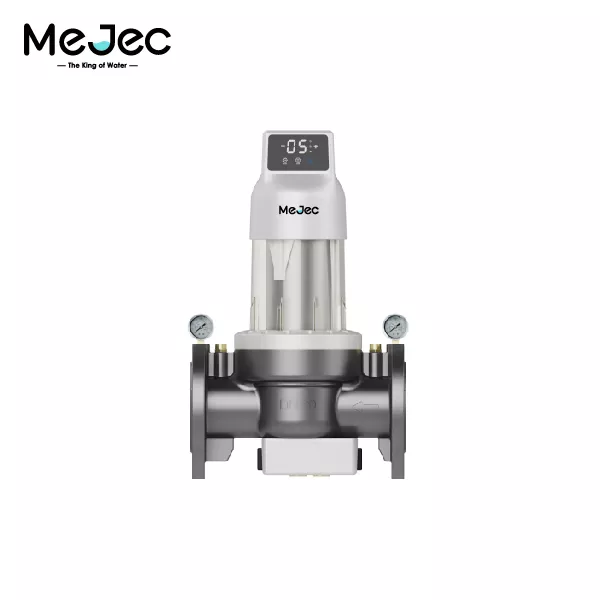
Engineered as the essential first barrier for wate...
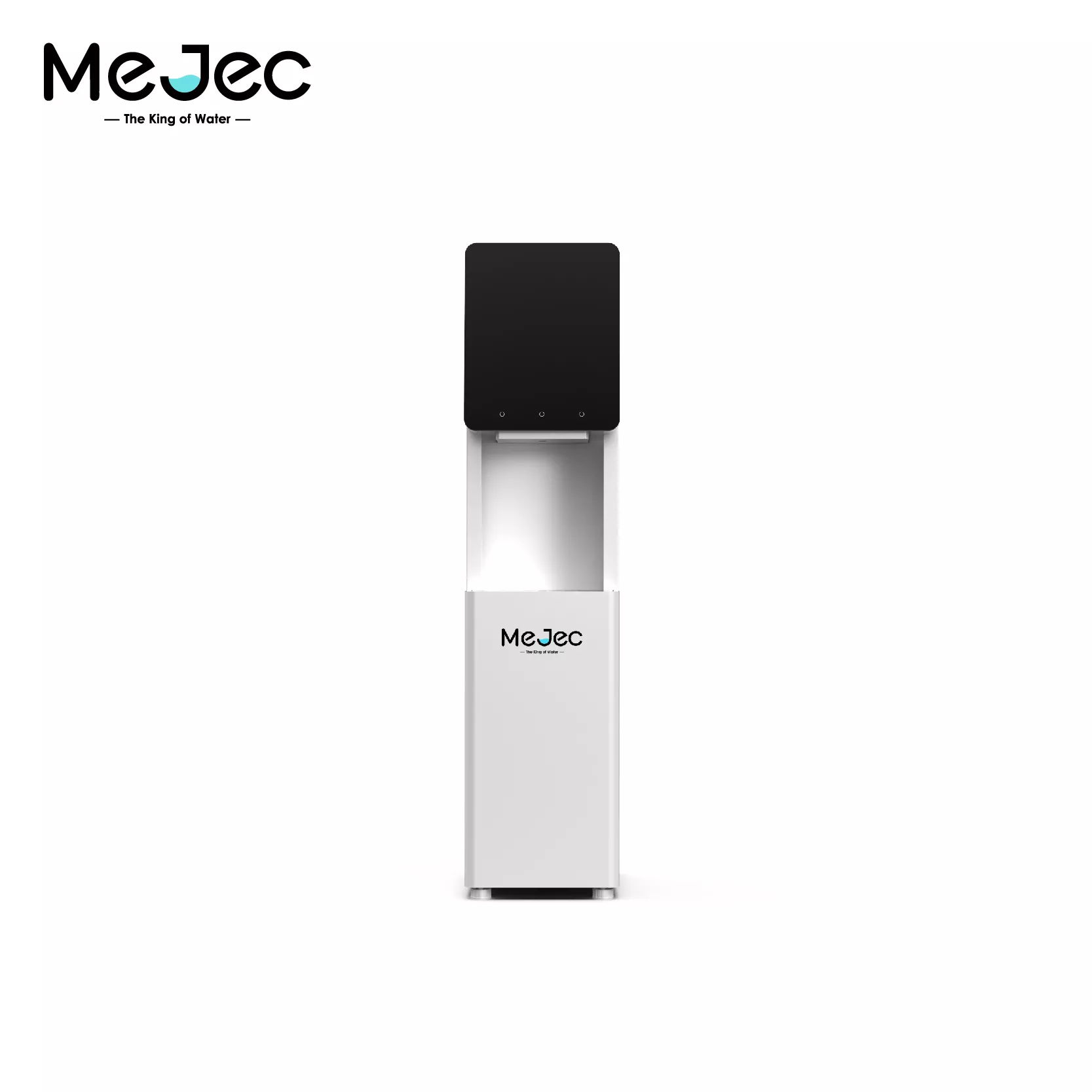
The Mejec commercial drinking machine features a l...

Our RO system combines cutting-edge convenience wi...
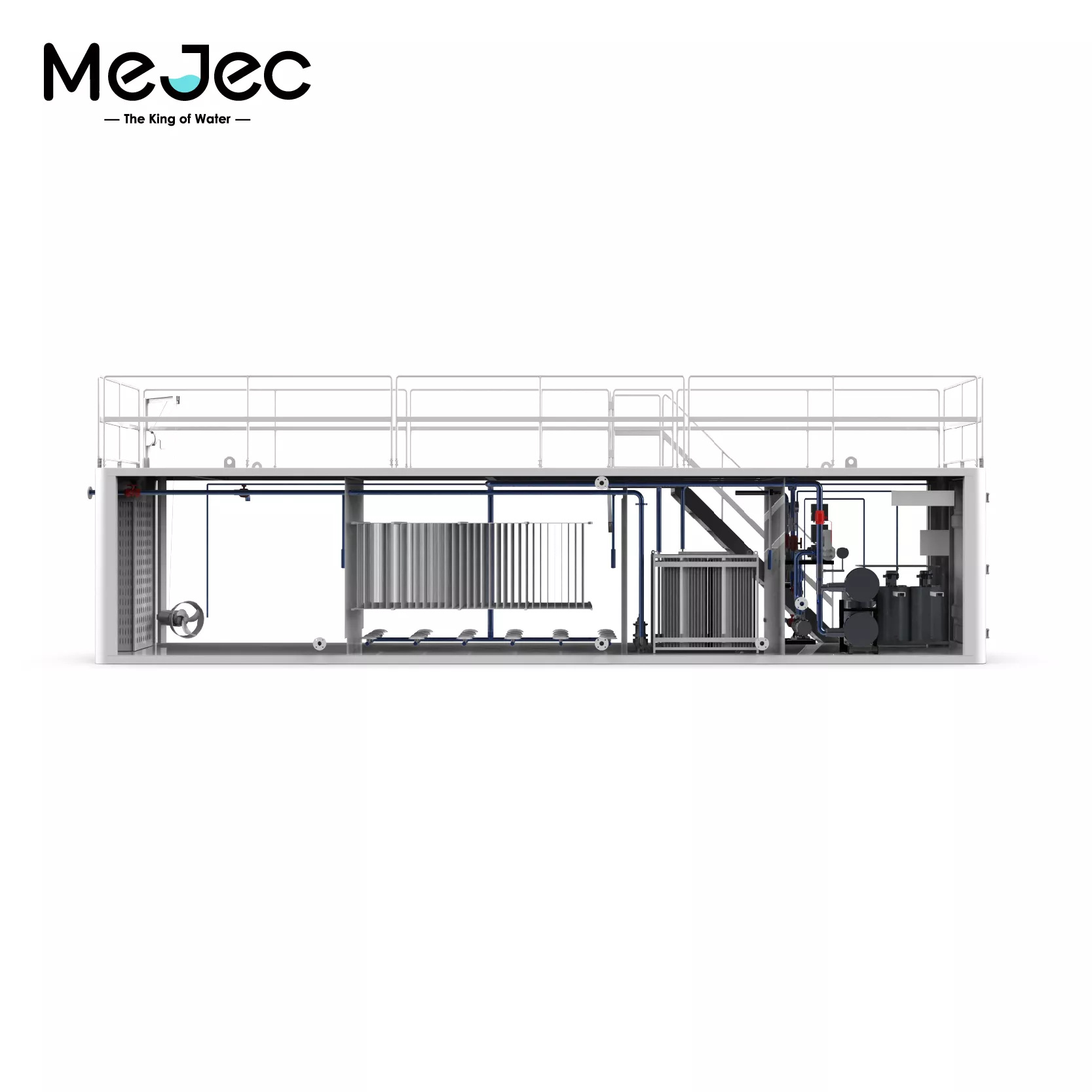
Mejec containerized sewage treatment system incorp...
Select the most popular foreign trade service products to meet your diverse needs
Select the most popular foreign trade service products to meet your diverse needs





User Comments
Service Experience Sharing from Real Customers
Michael Chen
Environmental EngineerThe advanced membrane bioreactor system we installed has dramatically improved our plant's effluent quality and reduced sludge production. Highly reliable and efficient.
Sarah Johnson
Plant Operations ManagerThe new dissolved air flotation unit has been a game-changer for our industrial pretreatment process. It consistently removes over 95% of fats, oils, and grease. Excellent performance with minimal maintenance.
David Rodriguez
Chief Technology OfficerImplementing their smart IoT monitoring and control system across our regional plants has optimized chemical dosing and energy use, leading to significant cost savings and regulatory compliance. Top-notch technology.
Lisa Wang
Research ScientistThe pilot-scale anaerobic digestion package for our lab has provided robust and consistent data for bioenergy recovery from high-strength wastewater. A well-designed and valuable research tool.